



“Are you there, God?” That’s a question asked again and again in scripture and in the stories of our time - like teen fiction! Because it’s a question most of us can relate to.

You are enough! I find it easy to agree but hard to internalize. That’s why I wear it and preach it and share it because I think lots of us struggle with faith in our enoughness, too.

I am not a fan of Matthew’s Jesus. Too angry, too punitive, too much gnashing. I can however relate from my own experiences, to that sense of urgency. It’s the urgency of protest. It’s the urgency of now. It’s the urgency of knowing we have this one incredible life too accept a divine invitation we sometimes ignore.

I’m a senior, listening with rapt attention to my academic advisor and the Dean of Students, The Rev. Titus Pressler, preach. Repeatedly, he bangs his hand on the pulpit – exousia, exousia, exousia.

Generosity does not come naturally to us. Watch children in a sandbox or siblings at a dinner table or an inpatient infant with her mother. Generosity is taught and like faith, caught.

Too often when we contemplate forgiving we look behind us and not in front. We dwell on what was, instead of choosing to see our agency in turning our gaze. To wildly imagine what could be if we had the courage to let go. Let go of our sense of entitlement, or obligation, or resentment. And, sometimes, hurt and pain. Jesus had to let go of all of that too.

When I lived in Durham, NC my therapist was also a nun. What a win-win! I do not remember what prompted it but at one session she told me to read The Shack.

When I have those conversations, when I’m honest with myself about how hard this is, when I read and pray words of ancient scripture that reflect those underlying emotional realities, despite the difference in time and place, I feel connected to that which is greater than me, the really real. I hear Jesus’ faith that we are one.

I remember saying to myself as I stared at the altar, “Well, Arianne I think it’s official – I’m no longer Roman Catholic.”
That probably makes sense to some of you. You see, I was raised Roman Catholic. And while I had never been to a service like this before, I had certainly done my share of venerating.

“The time is coming,” Jesus says in this Sunday’s gospel, “when you will worship in spirit and in truth.” If you look at Eugene Peterson’s translation in The Message, it reads, “But the time is coming—it has, in fact, come—when what you’re called will not matter and where you go to worship will not matter.” (Jn 4:21-23)

Several years ago I was prompted to try something a little different. I imagined the sermon as a creative exploration of Nicodemus, as a religious leader who wrestled with the doubts, disappointments and difficulties that have called me to seek out God with my questions in the quiet of night.

Too often I hear people refer to Lent as a punitive season. A time for denying ourselves and bemoaning all the ways we aren’t good enough in our personal and spiritual lives. As if the purpose is to own up to all the ways we believe we are disappointing God.


How often do we say something (I love you, I do, I accept, I will, I get it, etc.) but the reality of the words have not yet transformed our being? In my imaginings, Jesus the teacher gave some prayerful thought to what it would take to get Peter and the disciples to the next level. Why not? The Son of God was fully human, he wasn’t reading a script.

Last summer I started taking a closer look at the objects I look at everyday. On the walls in my kitchen, my bedroom, my office. What surrounds me influences me. What I am taking in shapes my outlook.

There had to have been some quality of Jesus that propelled those disciples to go and see what he was up to, or at least where he was staying. John the Baptist got them to pay attention.
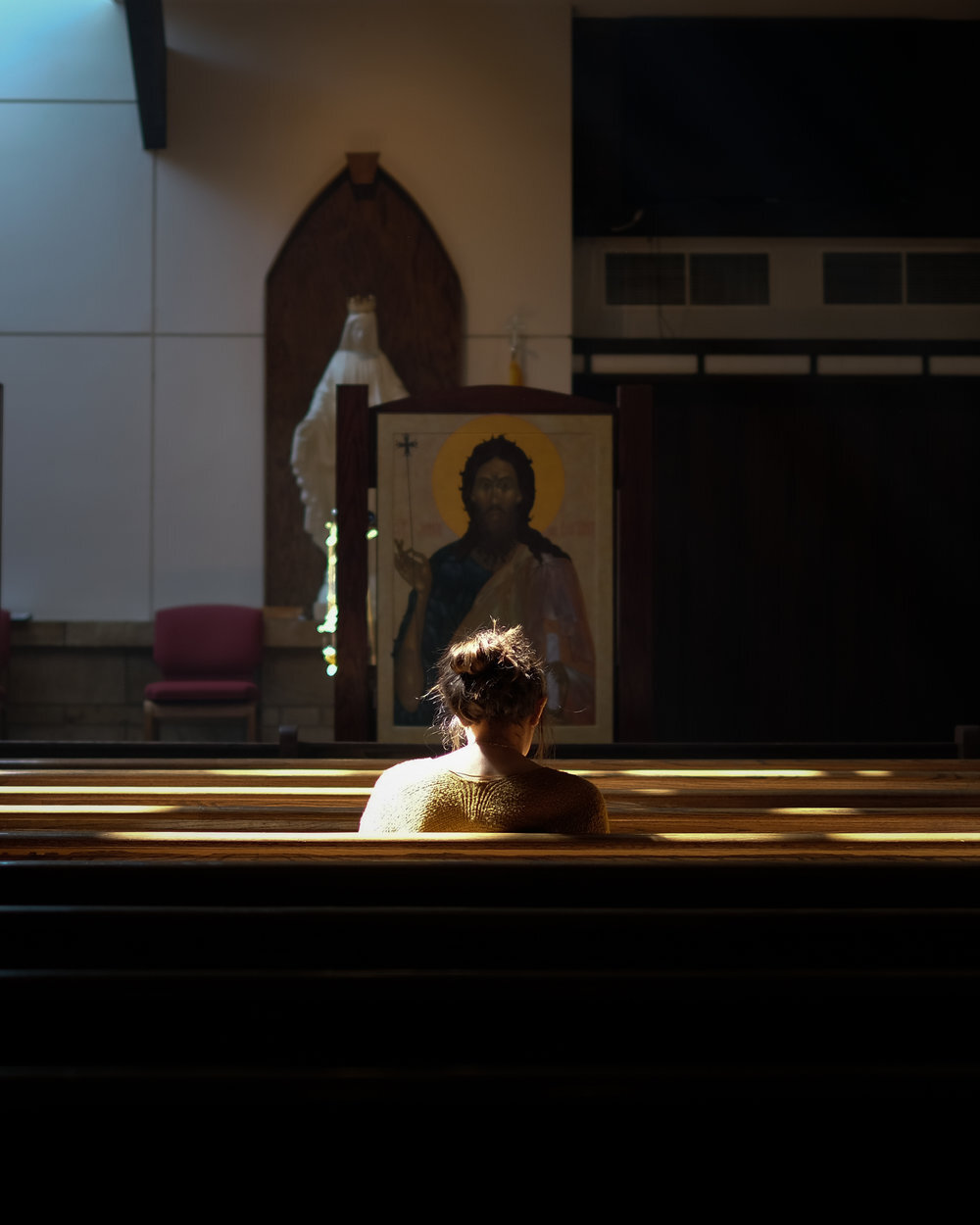
The big events, the ones where there is a before and an after, rarely play out exactly as we anticipate. Because we are expert at creating future realities in our minds. Setting internal expectations and believing what we dream of and plan for will come to pass in the ways we imagine.

Curiosity does not always lead to joy immediately, but, eventually it will. It is how we discover who we are, what we want to do, what we’re surprised we can do. It is how we meet new people. It is why curiosity can be courageous.

If God loves everyone, invites everyone, welcomes everyone into a relationship of belovedness and belonging, why do so many of us have a story of being made to feel like we don’t belong at church?

Perennial wisdom which resonates in new ways at different points in one’s life. My recap of Richard Rohr’s The Universal Christ: How a Forgotten Reality Can Change Everything We See, Hope For, And Believe.

Whenever I’ve attended a clergy conference, retreat, workshop, delegation, convention, you name it – there are clusters of collars, knitting. Someone in your pews needs to be reminded of an experience, a person stitched into their heart.

We are all, individuals and institutions alike, reluctant to wrestle with, let alone expose, the dark stuff inside. What shared shadows keep us from reaching out for our neighbor, or ourselves?

Love is my prompt, every time I preach. It’s the one sermon I feel I preach again and again. Even though you and I know they are all different. In this new space I want to prompt myself and prompt you in your preaching!